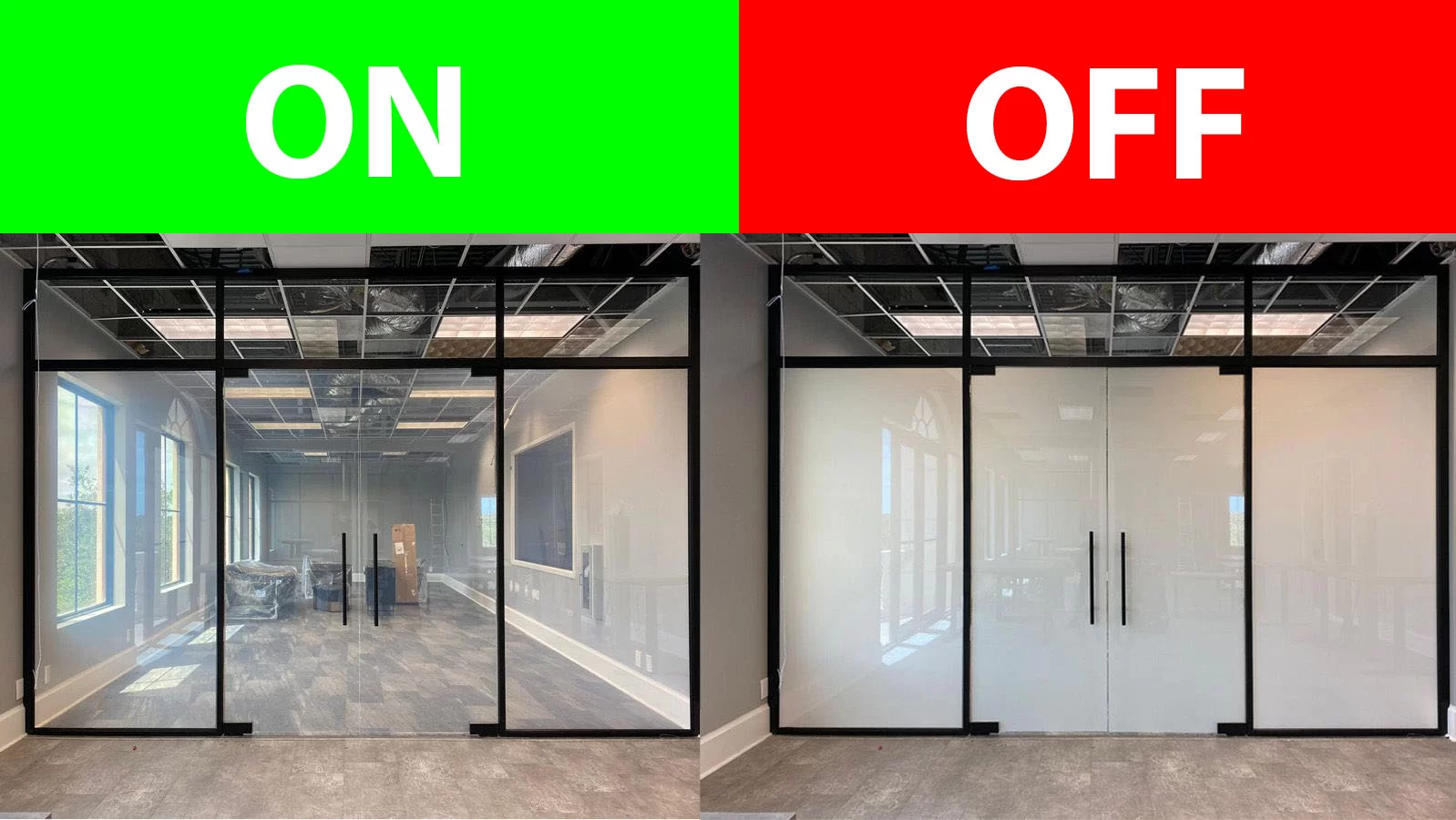
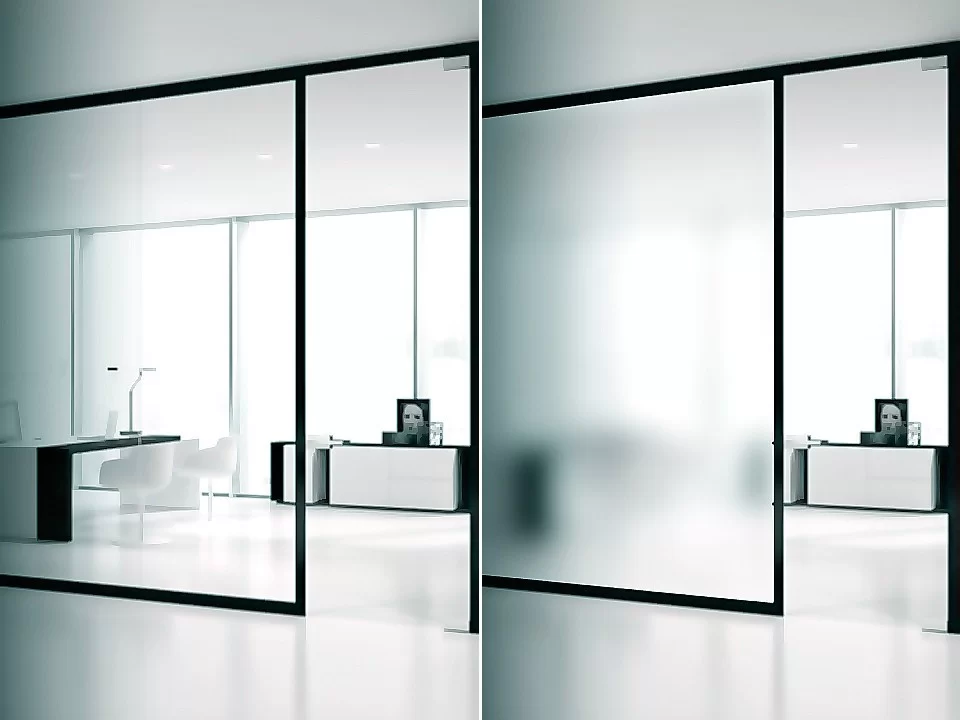
Smart film for glass is an innovative technology that has been gaining popularity in recent years. This film can be applied to glass surfaces and can be controlled to change the transparency of the glass, allowing for greater control of:
light;
privacy;
energy efficiency.
Smart film for glass works by using a layer of liquid crystal polymer, which can change its alignment in response to an electric current. When the film is applied to glass, it can be controlled using:
a remote control;
a phone app;
a building management system.
This allows the transparency of the glass to be adjusted. As a result, the film can be used to:
create privacy;
reduce glare;
control the amount of sunlight that enters a building.
One of the main benefits of smart film for glass is its ability to improve energy efficiency. By controlling the amount of sunlight that enters a building, smart film can:
reduce the amount of heat generated inside the building;
lower cooling costs;
reduce energy consumption;
help reduce a building’s carbon footprint by lowering carbon dioxide emissions.
Another benefit of smart film for glass is its ability to create privacy. The film can be applied to:
glass walls;
glass doors.
This allows private spaces to be created for meetings or conferences. When the film is turned on, it makes the glass opaque and prevents viewing from the outside. This can be especially useful for companies that work with sensitive data or confidential information.
Electrochromic glass can be used in a variety of settings, including:
offices;
hotels;
hospitals;
shops;
homes.
Its applications include:
Offices: creating confidential zones and controlling lighting within the building.
Hotels and hospitals: providing privacy for patients and guests.
Shops: creating interesting design solutions and attracting the attention of shoppers.
Homes: creating private spaces, such as in the bathroom.
However, smart film for glass does have some limitations.
It can be quite expensive, so not all companies or individuals may be able to afford it.
It may have a limited lifespan, so it is important to carefully review warranty terms before purchasing.
Overall, smart glass is an exciting technology that has the potential to transform the way we interact with glass surfaces. As the technology continues to evolve and become more accessible, we can expect to see it increasingly used in a variety of settings.
One area where smart film for glass has already shown great promise is the automotive industry. It can be used to:
regulate the amount of light entering the vehicle;
reduce glare;
improve visibility;
create safer driving conditions;
provide a more comfortable ride for passengers;
offer additional privacy for vehicle occupants.
This makes smart film an attractive feature for luxury cars and limousines.
Another area where smart film for glass is being used is architecture. It can be applied to large glass facades on buildings to:
control the amount of light entering the building;
reduce energy consumption;
improve environmental performance;
create dynamic facades that change appearance throughout the day.
Smart film for glass is also being used in interior design. It can be applied to:
glass partitions to create private spaces within a larger room;
glass dividers with custom designs as decorative elements.
This can be useful in open-plan offices or in homes where there is a need for flexible living spaces.
As the use of smart film for glass continues to grow, it is important to consider the potential implications for privacy. The technology should be used responsibly, with careful consideration of its impact on privacy.
In conclusion, smart film for glass is an exciting technology that has the potential to revolutionize the way we use glass surfaces. It offers:
greater control over transparency;
light regulation;
improved energy efficiency;
the ability to create private spaces.
However, it is important to carefully consider the capabilities and limitations of the technology and use it responsibly.